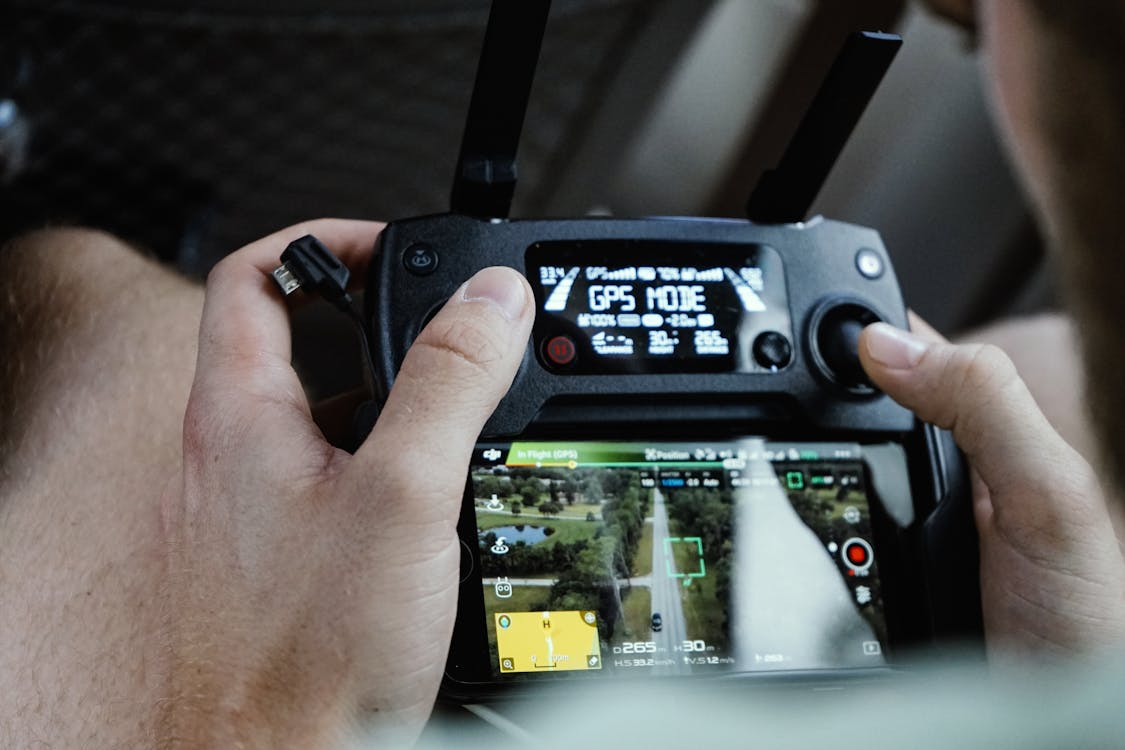
Every year, inspectors are injured doing work a drone could do from twenty meters away: walking fragile roofs, hanging off facades, climbing towers in gusting wind. Aerial inspection doesn't just find more defects — it removes people from the most dangerous part of the job.
THE GROUND CREW STAYS ON THE GROUND
A two-person drone crew captures an entire commercial roof in under two hours while the building keeps operating. No swing stages, no tie-offs, no shutdown of the loading dock below. For towers and chimneys, the aircraft holds a fixed standoff while zoom and thermal sensors do the close-up work.
The safety dividend compounds: fewer mobilizations, fewer permits for working at height, and a complete photographic record that protects both the owner and the contractor if a defect is disputed later.
THERMAL SEES WHAT EYES MISS
Most roof failures start invisible: trapped moisture under a membrane, a hot breaker in a panel, a failing solar cell. Radiometric thermal flights map heat signatures across the whole asset in one pass, flagging anomalies years before they become leaks or fires.
"The roof inspection found two leaks our walkthrough missed. Annotated photos, clear priorities, report in my inbox the next day." — Priya F. Raman, Facilities Lead
FROM IMAGERY TO ACTION IN 48 HOURS
Raw footage alone doesn't fix anything. Our reports rank every finding — critical, watch, monitor — pin each to GPS-tagged imagery, and phrase recommendations so a contractor can price them without a second site visit. Repeat flights then verify the repair, closing the loop with proof.
- Schedule inspections before storm season, not after the leak.
- Pair visual and thermal sensors on the same flight for a complete picture.
- Keep every report — year-over-year imagery is your best warranty claim.